
Introduction
The iran israel war has become one of the most sensitive and widely discussed geopolitical tensions in the modern Middle East. Although not always declared as a formal war, the ongoing hostility between Iran and Israel has shaped regional alliances, military strategies, and global diplomacy. From proxy conflicts to cyber operations and airstrikes, the confrontation continues to influence global politics and economic stability.
Understanding the roots, developments, and possible outcomes of the iran israel war is essential for anyone following international affairs. This article explores the historical background, key triggers, regional consequences, and what the future may hold.
Historical Background of the Conflict
From Cooperation to Hostility
Before the Islamic Revolution in Iran, relations between Iran and Israel were relatively stable. Under the rule of the Shah, Iran maintained diplomatic and economic ties with Israel. However, everything changed after the rise of Ayatollah Ruhollah Khomeini. The new Iranian government adopted a firm anti-Israel stance, refusing to recognize the state of Israel and supporting groups opposed to it.
Since then, ideological differences have driven the iran israel war narrative. Iran views Israel as illegitimate, while Israel considers Iran’s policies and military expansion a direct threat to its security.
Core Causes of the Iran Israel War
Ideological and Political Differences
The central cause of the iran israel war lies in deep ideological opposition. Iran’s leadership has consistently supported Palestinian resistance movements, including Hamas and Hezbollah. Israel sees this support as an aggressive strategy aimed at surrounding and destabilizing it.
Nuclear Program Concerns
Another critical factor fueling the iran israel war is Iran’s nuclear program. Israel believes that Iran’s nuclear ambitions could threaten its national security. Israeli leaders have repeatedly stated they would prevent Iran from obtaining nuclear weapons at any cost.
Tensions increased after the signing of the Joint Comprehensive Plan of Action, which aimed to limit Iran’s nuclear activities in exchange for sanction relief. While some nations supported the agreement, Israel strongly opposed it, arguing it did not sufficiently restrict Iran’s capabilities.
Proxy Conflicts and Regional Influence
Syria as a Battlefield
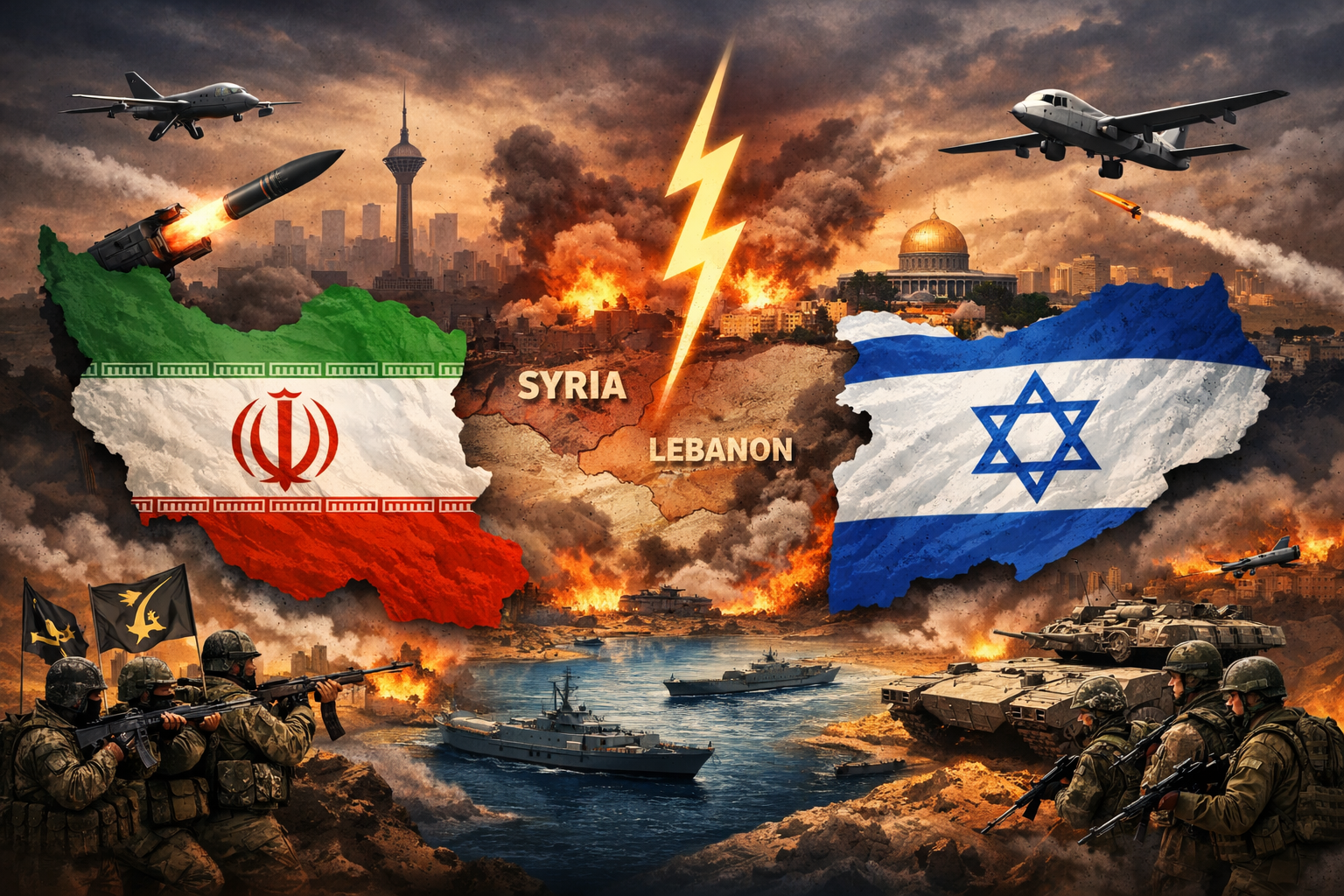
One of the most visible aspects of the iran israel war has been in Syria. During the Syrian civil war, Iran supported the government of Bashar al-Assad, while Israel conducted airstrikes targeting Iranian positions and weapons shipments.
Israel’s objective has been to prevent Iran from establishing a permanent military presence near its borders. These strikes have increased the risk of direct confrontation.
Lebanon and Hezbollah
Iran’s backing of Hezbollah has created a constant security concern for Israel. Hezbollah possesses a significant missile arsenal, and its close ties with Tehran make Lebanon a potential frontline in the iran israel war scenario.
Military Strategies and Modern Warfare
Cyber and Intelligence Operations
The iran israel war is not limited to traditional military action. Cyberattacks, intelligence operations, and covert missions have played a major role. Both nations are believed to have conducted cyber operations targeting critical infrastructure and military systems.
These modern tactics allow both sides to apply pressure without triggering full-scale war.
Airstrikes and Strategic Targets
Israel has frequently launched airstrikes aimed at Iranian assets in Syria. Meanwhile, Iran has reportedly supported attacks against Israeli-linked targets through allied groups. The shadow war continues to escalate tensions while avoiding open battlefield confrontation.
Global Impact of the Conflict
Energy Markets and Economic Stability
The Middle East is central to global energy supplies. Any escalation in the iran israel war could disrupt oil routes, affecting international markets. Investors and governments closely monitor developments because instability can rapidly influence fuel prices and economic growth.
International Alliances
Major global powers are deeply involved in the region. The United States has historically supported Israel, while Iran maintains strategic partnerships with countries such as Russia. These alliances increase the complexity of the conflict and raise concerns about broader regional escalation.
Possible Future Scenarios
Diplomatic De-escalation
One possible outcome of the iran israel war tensions is renewed diplomacy. International mediation efforts could help reduce hostilities, particularly regarding nuclear concerns and regional security arrangements.
Risk of Direct Confrontation
Despite years of indirect conflict, there remains a risk that miscalculation could lead to direct military engagement. Such a scenario would likely involve missile exchanges, air warfare, and broader regional instability.
Continued Shadow Conflict
The most likely short-term scenario is the continuation of the current shadow conflict. Limited strikes, cyber operations, and proxy battles may persist without escalating into full-scale war.
Humanitarian Consequences
Any expansion of the iran israel war would have serious humanitarian consequences. Civilians in neighboring countries could face displacement, infrastructure damage, and economic hardship. The broader Middle East region has already experienced prolonged instability, and further escalation would deepen existing crises.
Conclusion
The iran israel war represents one of the most complex and dangerous geopolitical tensions in the modern world. Rooted in ideological opposition, nuclear concerns, and regional power struggles, the conflict has evolved into a multifaceted confrontation involving cyber warfare, proxy battles, and strategic airstrikes.
While full-scale war has been avoided so far, the risk of escalation remains real. Diplomatic efforts, international cooperation, and careful strategic decisions will determine whether the future holds peace or further instability. Understanding the causes and consequences of this ongoing tension is crucial for policymakers, analysts, and global citizens alike.
FAQs
What started the iran israel war
The tension began after Iran’s Islamic Revolution, when the new leadership adopted a strong anti-Israel position and cut diplomatic ties.
Is there an official declaration of the iran israel war
There has been no formal declaration of war, but ongoing proxy conflicts and military actions have created a continuous state of hostility.
Why is Iran’s nuclear program important in the iran israel war
Israel views Iran’s nuclear ambitions as a potential existential threat, making it a central issue in the conflict.
How does the iran israel war affect global oil prices
Any escalation can threaten Middle Eastern oil routes, leading to increased global energy prices and economic uncertainty.
Could the iran israel war turn into a full regional war
Yes, if direct military confrontation occurs or if proxy conflicts expand, it could draw in other regional and global powers.